
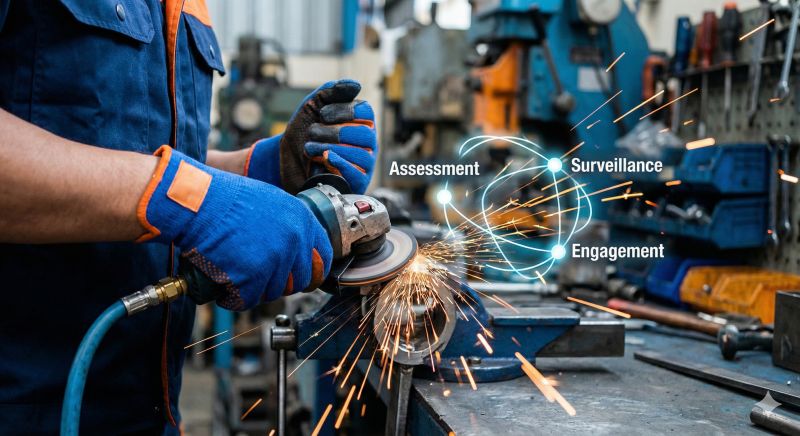
The three pillars of effective HAVS prevention
Most organisations get one out of three right when it comes to HAVS prevention. That's not a programme — it's a gap.
Three requirements for effective HAVS prevention: exposure assessment, health surveillance, and workforce engagement. Most organisations implement only one.
Successful HAVS management requires coordinated action across multiple organisational functions, from procurement to health surveillance. Isolated interventions—buying better gloves, rotating workers, restricting tool time—address symptoms without tackling root causes.
1/ EXPOSURE ASSESSMENT
Effective programmes begin with comprehensive vibration exposure assessment, mapping all tools and tasks to identify priority areas. This baseline should document current tool vibration levels, individual and collective exposure patterns through trigger-time studies, and existing control measures with their effectiveness. The resulting exposure profile guides targeted investment in low-vibration pneumatic tools.
2/ HEALTH SURVEILLANCE
Health surveillance provides essential feedback on programme effectiveness while enabling early intervention for affected workers. Tiered surveillance protocols allocate resources efficiently: annual questionnaire screening for all exposed workers, clinical assessment for those reporting symptoms, and specialist referral for confirmed cases.
Early detection of HAVS symptoms allows timely implementation of exposure restrictions, job modifications, or tool changes that prevent progression to irreversible damage. Documentation of health outcomes provides crucial evidence of due diligence for regulatory compliance.
3/ WORKFORCE ENGAGEMENT
Sustained programme success depends on workforce engagement and capability building across all organisational levels. Operators need practical training on vibration risks, symptom recognition, and the importance of early reporting. Supervisors require competency in exposure calculation, control selection, and health surveillance requirements. Procurement teams must understand how to specify and verify vibration performance requirements when selecting new equipment.
This coordinated approach ensures vibration injury prevention becomes embedded in operational culture rather than remaining a compliance checkbox.