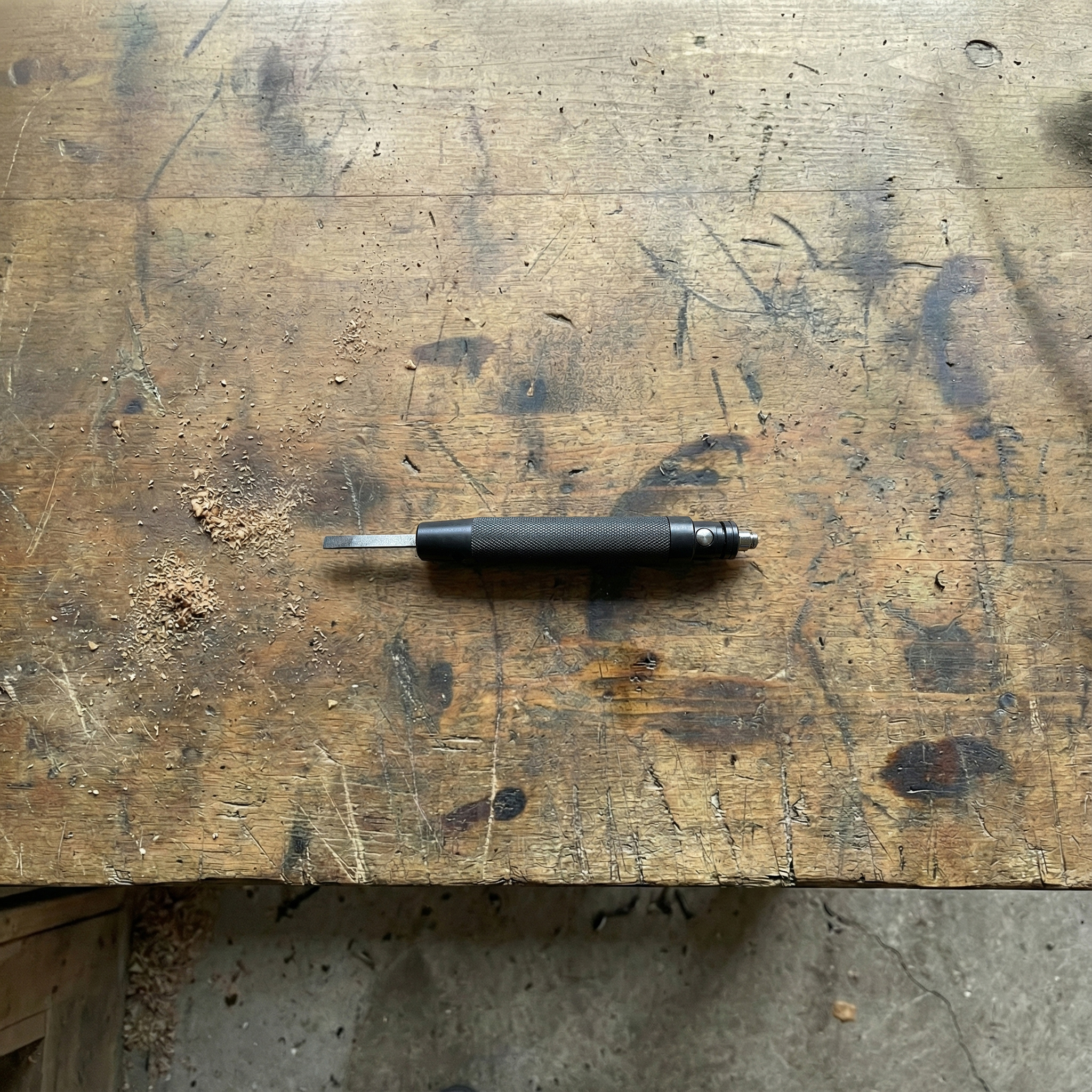
Air files offer precision filing with high-speed, controlled strokes, making them perfect for deburring, smoothing, and fine-tuning metal surfaces. Ideal for work where detail and accuracy matter.
Air files, also called reciprocating files, move a file blade back and forth several thousand times a minute. Toolmakers, die and mould shops, foundries and aerospace workshops use them for deburring, fitting, finishing edges and reaching corners that a rotary tool would round off.
The tool is held close to the work like a pencil, so every stroke of the piston goes into the fingers. The fine motor control the job needs disappears as the hand goes numb.
Filing is a control task. A steady blade gives a flat surface, an even edge and fewer strokes to reach the tolerance. It also lets the operator work a full shift on detail work without the tingling that ends a day early.
The ultra-light FRV-60 A and FRV-60 B are declared at 1.8 and under 2 m/s², below the EU exposure action value of 2.5 m/s², and weigh 0.30 kg. The heavy duty FRV-110 sits at 2.1 m/s² with 1.5 l/s air consumption. Noise stays between 66 and 75 dB(A).
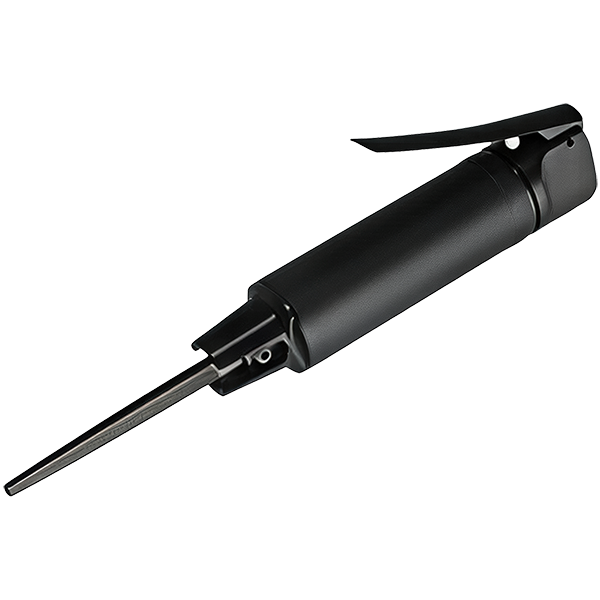
Experience the exceptional performance of our reciprocating machine.
More info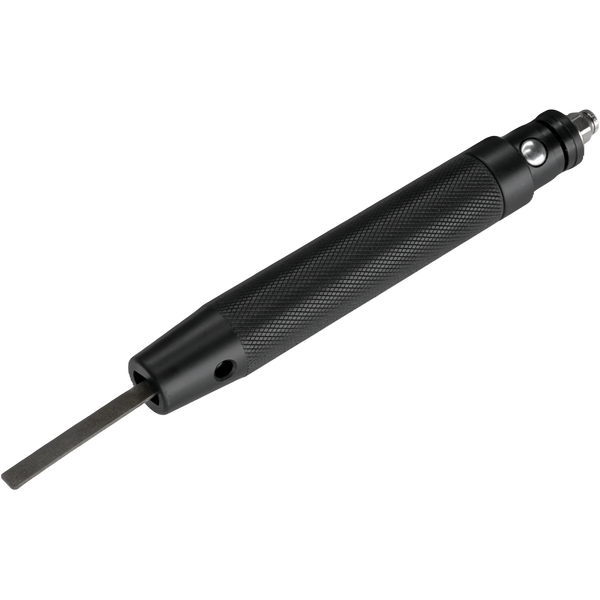
Experience the seamless operation of our air file.
More infoExperience the seamless operation of our air file.
More info