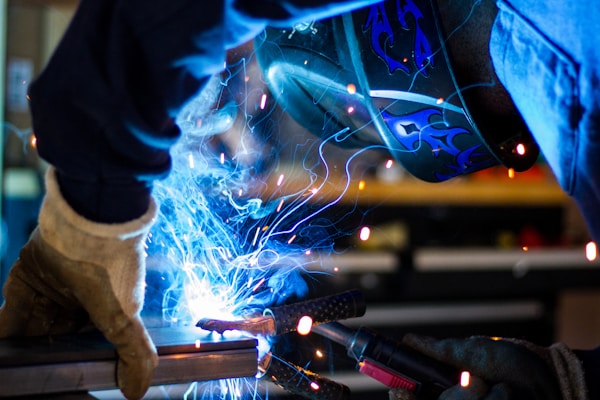
Needle scalers use a bundle of vibrating steel needles to quickly remove rust, paint, and debris from uneven or contoured surfaces. They’re ideal for cleaning textured metals, welds, and hard-to-reach areas with minimal surface damage.
Needle scalers drive a bundle of hardened steel needles against the surface, so they follow weld beads, rivets, castings and pitted steel where a grinder or a single chisel cannot reach. Their main job is removing slag from welds. Shipyards, steel fabricators, foundries and maintenance crews also use them for rust and paint removal, marine scale and cleaning concrete.
In a standard tool the piston hits the needle holder directly and the recoil travels straight into the grip. The operator absorbs it at every blow, and on a long weld seam that exposure is counted from the first minute of trigger time.
Low vibration is not only a health question. With less recoil the operator can keep the needles on the seam with a lighter grip, work longer between breaks and finish a weld or a hull section in fewer passes. A lower A(8) figure also means fewer people need to be rotated onto the task.
IPT needle scalers keep the piston forces inside the tool instead of letting them reach the handle. Declared values run from 3.1 m/s² for the PNV-19 and 3.2 m/s² for the compact SNV-18 to 4.0 m/s² for the heavy duty GNV-28, all below the EU exposure limit value of 5.0 m/s². Air consumption stays between 1.4 and 2.2 l/s, so the tools run on a normal workshop compressor.
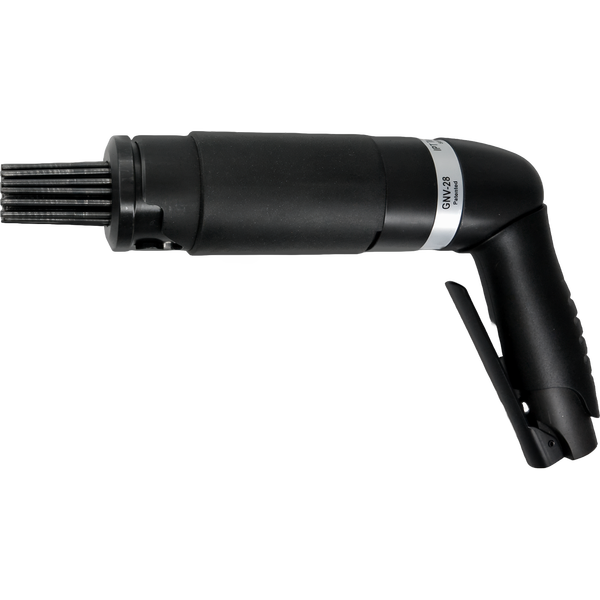
Experience the unmatched performance of the Heavy Duty GNV-28 needle gun.
More info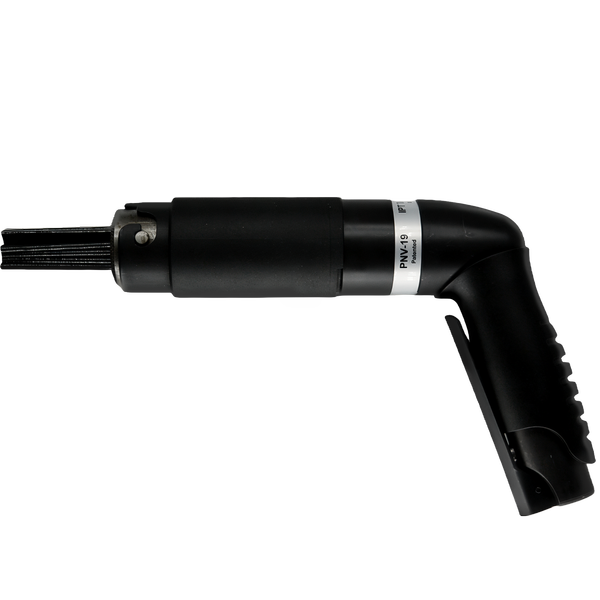
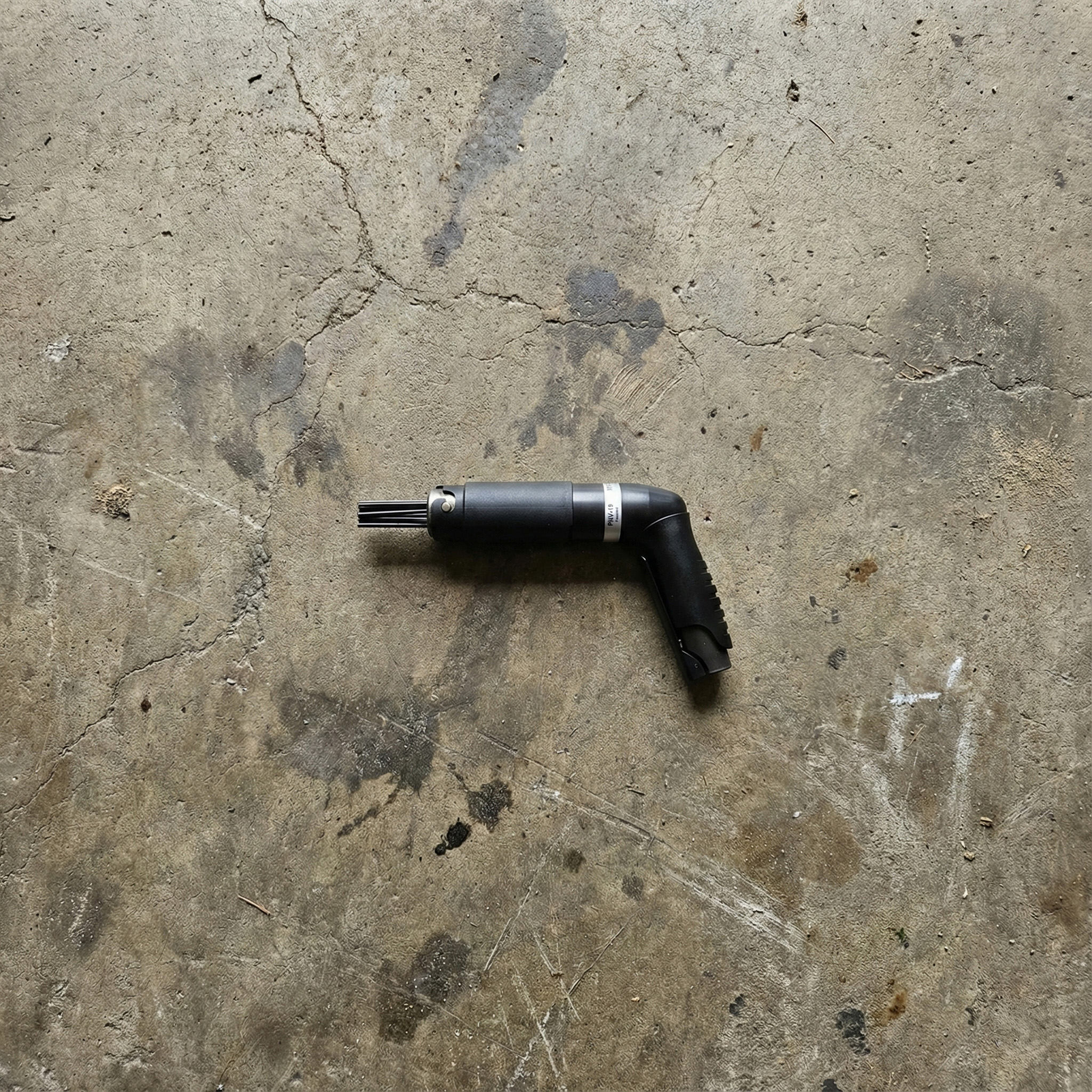
PNV-19 is a truly remarkable tool! You can even operate the tool with one hand.
More info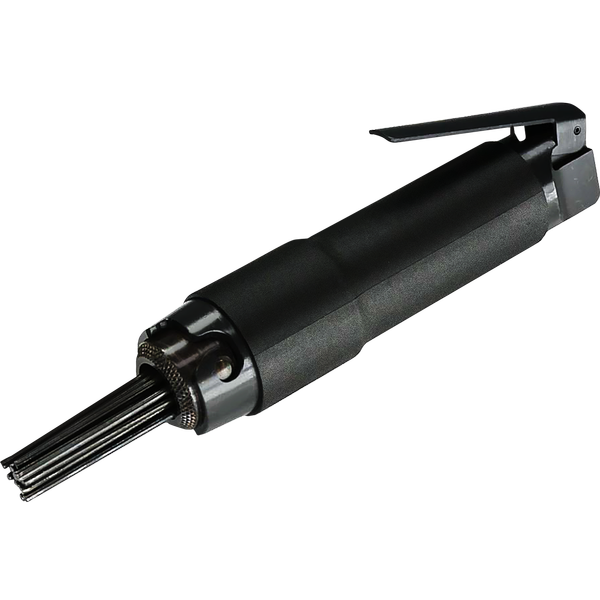
The latest addition to our proven high power and low vibration needle scalers!
More info